
7372 Woida Rd N Baxter, MN 56425


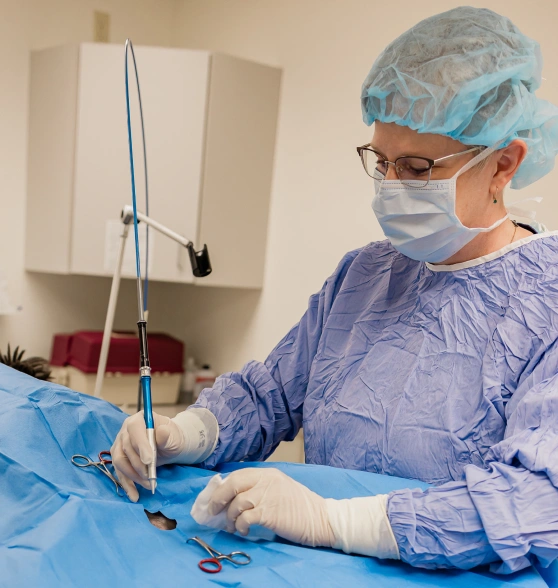
General & Advanced Surgery
The majority of surgical procedures involve either general or local anesthesia. General anesthesia puts the patient in a deep sleep for the procedure. For procedures that involve a general anesthetic, the patient will be advised to stay overnight for monitoring. During all surgeries when the pet is under general anesthesia, the pet’s vital signs will be closely monitored by a technician using ECG technology throughout for safety. The monitoring process will allow the veterinary team to quickly act if an anesthesia or surgical issue poses a danger during the procedure.
Local anesthesia numbs a certain body part for the procedure. Sometimes, local and general anesthesia are used together for a greater degree of pain management. Local anesthesia can be used by itself for the treatment of small skin growths or lacerations, but can be difficult to implement in other procedures because the animal will not want to sit still for the surgery in most circumstances, even if they are numbed.
Some common surgeries that our doctors perform include:
- Spay/neuter surgery
- Soft tissue surgery
- Orthopedic surgery
- Mass removal
- C-sections
- Foreign body removal
- Gastrointestinal procedures
- Laser surgery
Our surgical suite is sterilized to provide the appropriate environment for the health and safety of surgical patients. All of the surgical instruments are thoroughly sanitized and any veterinarian or technician in the exam room will be wearing proper surgical garments to reduce any risks of infection or exposure.
Spay/Neuter Procedure
The primary objective of spay/neuter procedure is to prevent the animal from reproducing, but there are several other benefits associated with the procedure.
Spaying, or the removal of the ovaries and uterus of female pets, decreases or eliminates the pet’s chance of contracting the following conditions:
- Breast cancer
- Uterine cancer
- Pyometra (a life-threatening infection of the uterus)
- Uterine infections
In addition, a spayed dog or cat will not have a heat cycle. During a heat cycle, it is common for both cats and dogs to behave unusually, make increased vocalizations, and bleed for days at a time. These behaviors and biological responses are often a headache for owners of female animals, but they can be avoided.
Neutering, or the removal of the testes of male pets, can decrease the pet’s chances of contracting the following conditions:
- Testicular cancer
- Prostate cancer
- Benign prostatic hyperplasia
Neutered males also have a decreased desire to roam away from home, which helps keep them safe. Many people believe that neutered males are also easier to train than intact males, because they are better able to focus.
For both genders, spaying or neutering can relieve their owners from the financial, legal, and moral burdens of caring for an unplanned litter. Every year, tens of thousands of animals are euthanized because they do not have a home. Please avoid contributing to the pet homelessness crisis by preventing an unplanned litter and having your pet spayed or neutered.
